By Caleb Centanni and Matt Young:
OVERALL GENERAL FORECAST with notes on food crops and broken out finch forecasts for Central and Western regions of the North America and the United States (see Winter Finch Forecast for eastern regions 9/27/26)
For the first time, we’re piloting an Irruption Alert Winter Finch Forecast for the central part of the United States (from the Mississippi to the Rockies) and the western states (Rockies westward). Predicting a forecast for the western states is significantly trickier than the east given their complex topography and frequent elevational or local movements, but the community on Finches, Irruptions and Mast Crops has been quite helpful sending reports (big kudos to Carl Lundblad, Garret McDonald, Brain Maxfield, Marina Nordstand, Ben Guo and others). Parts of this are a forecast and a bit experimental, and others more of an alert about event that have been going on already for a few weeks. In the months and years ahead, we hope to keep improving upon on it and adding more data sources so the community at-large benefits. If you have ideas or data sources you believe would improve future forecasts for the west, please reach out to Matt and Caleb.
There are two areas of good conifer food crops. In the East from central Ontario eastward into the Maritimes, but more importantly for this forecast, there are reasonably large spruce crops from parts of northern British Columbia to Alaska, with some areas of moderate Engelmann and white spruce cone availability.
This summer, there has been a Spruce budworm outbreak in the North Cascades as there was an unfortunate Evening Grosbeak roadkill event that was exacerbated by floods and redpoductive success from the budworm outbreak. Here is more info on the Evening Grosbeak roadkill event.
Given the combined affects of drought, fires and the cyclical nature of food crops, there has been a widespread significant cone crop failure on limber, whitebark, pinyon and ponderosa pines in the interior areas of the mountain west. Douglas fir and Western Hemlock crops are spotty and fair at best from reports we’ve received as well. Type 2 Red Crossbill started moving across the country west to east in July-August giving us our first hint at what was taking place across the west. The widespread crop failure has led to several species moving around in numbers, and we’ll get to more on that below. For several pine-dependent species, this may represent an intensity of irruption unprecedented in the last decade.
INDIVIDUAL FORECAST
As stated above, for the first time here is a first stab at central and western irruptions for several species. In the below we discuss the irruption of a few irruptive corvids (aka non‐finch passerines) whose movements are often linked to finches and food crops. Follow finch wanderings this fall and winter on eBird, the Finch Research Network and the Finches, Irruptions and Mast Crops Facebook group for more information.
PINE GROSBEAK
Central Region (West of the Mississippi and East of the Rockies)
Mountain-ash fruit crops are heavy across many areas of the boreal, and we do not expect a notable Pine Grosbeak irruption across the central part of the country where this species is rarely found anyway. The one area that will likely get a few, is the edge of the central/eastern regions in Minnesota from Sax Sim bog northward and a bit westward. However, the species does appear to be moving in small numbers out of the Northern Rockies into the far western prairies of Alberta and Montana, perhaps prefacing a regional elevational irruption. This is something to watch!
Western Region (Rockies Westward)
We also do not expect any particularly noteworthy Pine Grosbeak irruptions across the western part of the continent, but data is lacking on exactly which populations irrupt (we believe the likely candidate is ssp. montana in southern BC, but ssp. flammula in Northern BC) it is in to the Pacific Northwest, making an accurate forecast challenging. It’s possible that small movements out of the Northern Rockies could preface a small-scale Pacific Northwest irruption.
When they show up at feeders, they prefer black oil sunflower seeds at large platform or hopper feeders.
PURPLE FINCH
Central Region
If any kind of small sized irruption develops this winter, the central Region has as good of a chance if not better chance than the eastern region. Last year’s eastern event also was witnessed across the central areas of Missouri, Arkansas and eastern portions of the Dakotas and Oklahoma and Texas. If a small irruption develops across the central areas, it might be a late developing one in late November to December/January. As of this alert, a Purple Finch has already been reported from Central Oklahoma, and birds are present at normal densities on the Great Plains. The central region of the continent is occupied by the eastern subspecies/call type.
Western Region
The Western subspecies/call type of the Purple Finch is less irruptive than the eastern subspecies/call type, but localized movements do take place, and sometimes populations do move more from the north to the south from year to year like Cassie’s Finches do. For instance, Purple Finches are more prevalent in the dry ponderosa-juniper woodlands of Central Oregon this year than in previous falls documented on eBird. Please help us understand the local movements of the western Purple Finch by eBirding and submitting recordings when you encounter the species. If you have intel, please reach out. For more on the call types, here is a paper the we published a few months ago: https://www.frontiersin.org/journals/bird-science/articles/10.3389/fbirs.2026.1770303/full
The Purple Finch Project is linked here as well: https://finchnetwork.org/purple-finch-project
At feeders, Purple Finches prefer black oil sunflower seeds. Away from feeders, this species is known to feed on lilac, various ashes including mountain-ash (not a true ash, but a member of the rose family Rosaceae), and other deciduous and coniferous seeds during the winter.
REDPOLL
Central Region
Birch crops on yellow, paper, gray and bog (swamp bitch) all appear mixed and variable across the boreal and we do not expect any large irruptions down the middle of the continent into the states. Again at the edge of this region, a small event could take place in eastern Montana, North Dakota and western Minnesota. If any sizable flight does happen to materialize, a few “Hoaries” should be expected in larger flocks.
Western Region
Sure, a few Redpolls may make it into usual areas of Montana, Idaho and Washington, but we also do not expect a large irruption of redpolls across Western States south of the typical wintering grounds. A few birds are present in the Canadian Rockies and have been since summer. Redpoll irruptions in the west can occur at significant magnitudes, especially into the interior northwest, but the exact conditions which predict them are not well-documented. Redpolls often react to snow coverage in the north, so warm temperatures from the intense El Niño currently underway could reduce northwest snowpack and stifle irruptive potential.
Watch for redpolls on birches (including in urban area), in weedy fields and at bird feeders offering nyjer®and black oil sunflower seeds.
In 2024, Common Redpoll, Hoary Redpoll and the Lesser Redpoll in Europe have all been lumped into the same species, now called Redpoll. Genetic work found that a supergene was responsible for the Redpoll plumage differences. See the link below for photos and identification marks of the Redpoll subspecies.
RED CROSSBILL: IRRUPTION ALERT!
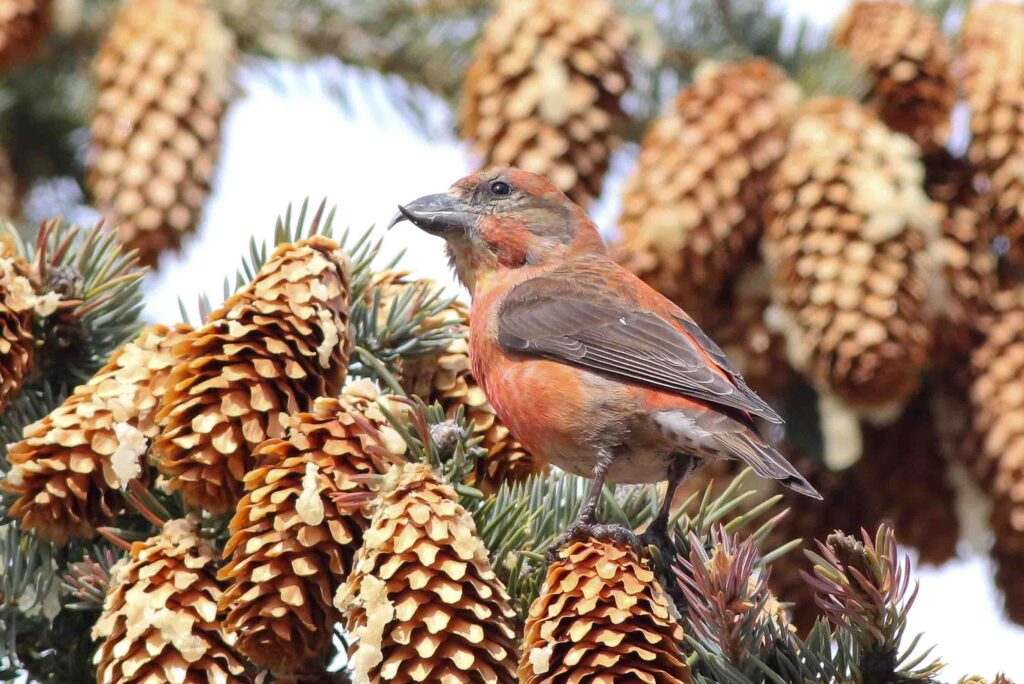
There has also been a significant irruption of Type 2 Red Crossbills that has moved west to east across the country, following a good to great eastern white pine crop and a moderate spruce crop in interior sections of southeastern Canada toward the Great Lakes and Northeastern states. Type 2 waged a huge irruption west to east in 2023-24. As the winter progresses, expect more Type 2s to make their way eastward.
Central Region
After two fairly widespread large ponderosa pine cone crops, the ponderosa crop has busted (as has limber, white bark and most pinyons), and Type 2 have irrupted out in to the Plains states and expect the irruption to continue to grow and move around in the central area of the country from east of the Rockies to the Mississippi. A few Type 4 will be tagging a long as well. Will a few Type 3 and 5 move with them? Record birds!
The Red Crossbill types are usually impossible to identify without recordings of their flight calls. Recordings can be made with a smartphone and identified to type. Matt Young (info@finchnetwork.org) will identify types if you email him your recordings or upload them to an eBird checklist. Matt and fellow FiRN board member Tim Spahr have now listened to upwards 30,000 recordings. Recordings uploaded to eBird checklists are deposited in the Macaulay Library. See the link at the bottom for more on the Red Crossbill call types.
Western Region
Consistent with a full irruption phase, Type 2 have expanded out of the core ponderosa pine forests toward areas of the west where they are less common, such as the Willamette Valley of Oregon, Vancouver Island, and Southern California. Again, this is because of widespread pine crop failure. Expect Type 2 to show up in areas away from the mountains in the valleys where they aren’t typically as common most years.
The magnitude of this irruption appears to be at the typical 5-year high-water mark for the Willamette Valley, more extreme for the California Coast and lowland Colorado and New Mexico, and possibly unprecedented for the Puget Sound and Vancouver Island. There are signs of significant irruption in the southern Great Basin as well. Listen for Type 2s well south of their normal range in the Southwest this winter and in areas of the Pacific Coast atypical for the species, including possibly north on the BC Coast toward SE Alaska.
WHITE-WINGED CROSSBILL
The Crossbill Pendulum has swung a bit back east some this year after most White-winged Crossbills were in the western boreal for the winter of 2025-26. An excellent spruce crop seems to be in a narrower area this winter located in central BC to Alaska. This will likely hold the majority of birds, but expect small-scale movements into high-elevation Engelmann Spruce in the Rockies. Isolated reports in southern BC, the Washington Cascades, and in the Rockies south to Utah indicate potential for a small interior movement that could reach Northeast Oregon and Utah, but don’t expect a major northwest flight year like 2017 or 2021.
Central Region
There are two areas of good spruce crops, 1) in the east from central Ontario eastward into the Maritimes and the northeastern United States it is more fair to good, and 2) from northern British Columbia to Alaska. From western Manitoba to Alberta crops are mostly poor though white-winged crossbills were heard in Sax Sim Bog area in July on the edge of the central region, but It was reported that many in the Sax Zim Bog area moved on. A recent record from the Minneapolis area suggests some birds may be on the move. Over the course of winter a few may slide south into the region, but the central areas are not typical areas that see many White-winged Crossbills anyway. The more likely scenario is they keep flying around the boreal until the hit one off the better crops on either side of the continent.
Western Region
The crop isn’t great in the southwestern boreal, and so expect small numbers of White-winged Crossbills to be expected in the usual mountain spruce forests in the interior mountain west in the northern Cascades and Rockies. Isolated reports in the Washington Cascades and in the Rockies south to Utah suggest a small-scale interior movement of the species, but don’t expect a major northwest flight like in 2017 or 2021.
PINE SISKIN: IRRUPTION ALERT!
Central Region
The conifer cone crop across the central boreal is poor and so expect at least a moderate irruption through the central Region of the United States down to Texas. This appears to be a moderate southern Great Plains irruption year, more intense than 2024 and 2025 but less intense than 2020. Will this irruption continue to grow in scale? It is possible.
Per Christopher Frick in Kansas, “Pine Siskins arrived here early, starting with around 10 on 01 September and steadily increasing to around 60 today (15 September). This is a remarkable number considering it’s still two weeks earlier than the previous FOS date for the county.”
Western Region
Pine Siskins have already entered lowland areas throughout the Western Cordillera at abundances well above average. Expect a strong winter in all the maritime valleys of Washington, Oregon, and California and across the interior west south to Northern Mexico. Per Carl Lundblad, Pine Siskins were mostly absent in the Great Basin last fall and winter, and they began returning around early-mid summer, and are on the move, so we expect at least a notable irruptions down into the valleys at feeders across the interior west.
This entertaining species prefers nyjer® seeds in silo or sock feeders, but also likes to dine on black oil sunflower seeds in tube feeders.
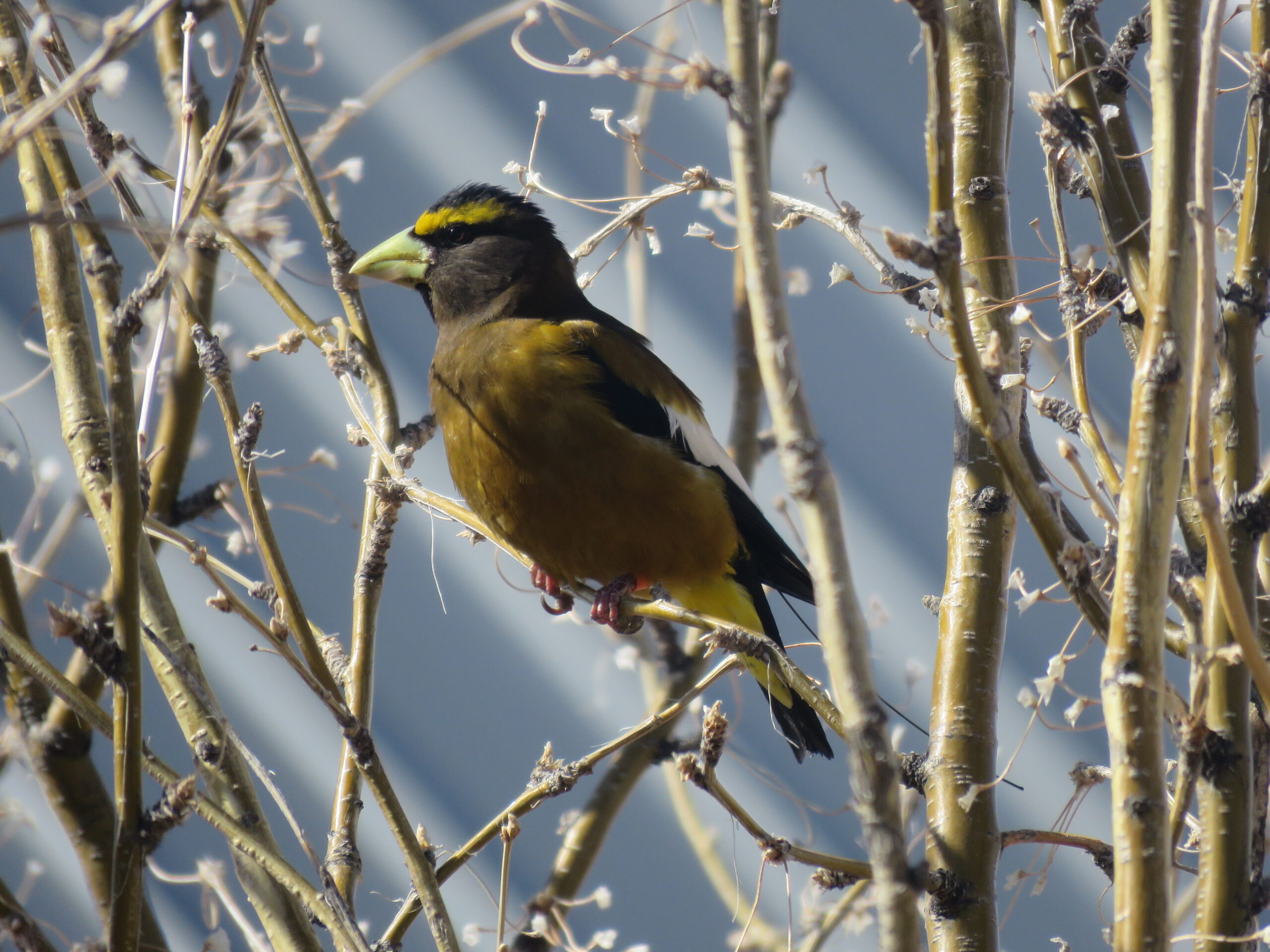
EVENING GROSBEAK: EXTREME IRRUPTION ALERT!
As the Finch Research Network have chronicled over the years, Type 1 Evening Grosbeak is the western irruptive call type, companion to Types 3 and 6 in the central and eastern boreal. They have been documented from Alaska all through the west to north Mexico. The other western types aren’t nearly as irruptive, especially type 2, which is mostly a Sierra Nevada bird. Type 4 is a local and a valley irruptive some years, but again, Type 1 is the bird across the west. Irruptions to the south are typical for this species about every other year, but this year is looking like a very large or even unprecedented irruption of Type 1. This is linked to a lack of these birds’ preferred ponderosa pine seeds, similar the the other species making big movements this year: Type 2 Red Crossbill, Red-breasted Nuthatch, Cassin’s Finch, Clark’s Nutcrackers, Pinyon Jay and even Woodhouse Scrub-Jays.
Please help us document this Type 1 Evening Grosbeak irruption! Again, send recordings to FiRN. The Evening Grosbeak types are usually impossible to identify without recordings of their flight calls. Recordings can be made with a smartphone and identified to type. Matt Young (info@finchnetwork.org) or Caleb Centanni (ctc222@cornell.edu) will identify types if you email him your recordings or upload them to an eBird checklist. Matt and fellow FiRN board member Tim Spahr have now listened to 1000s of Evening Grosbeak recordings. Recordings uploaded to eBird checklists are deposited in the Macaulay Library. See the link at the bottom for more on the Evening Grosbeak call types. Also, be aware that FiRN and a team of researchers at Orgon State also described Type 6, which is a new call type.
Central Region
On the western edge of the central region expect type 1, and be on the lookout even on the eastern edge in an irruption of this magnitude! Currrently, reports suggest a large movement onto the western edge of the Great Plains from Prairie Canada (where Type 6 may be implicated) to North Dakota and south all the way to southwestern Texas! Recordings are paramount to determine the origin of these central irruptions.
Clark’s Christopher Frick, Gove County, northwest Kansas:
Today (15 September) I had a brief visit from a single immature Evening Grosbeak. It only stayed a couple of minutes to visit my bath/drink station and never visited the many stocked seed feeders. This appears to be the only report for Kansas so far this fall, this species is fairly erratic out here and one-off sightings don’t always indicate a larger movement but I’m hoping this bird will prove to be the first of many this year/winter!
Per Garrett MacDonald, EVGR has been exceptionally rare statewide in ND since I moved here in 2018 and even before that. 1-2 records in the state a year. What is happening now with birds in 4-5 locations (and surely countless more if we had the birding population to find them) is pretty unprecedented in recent few decades.
Several reports of Evening Grosbeaks have continued to come in this year from eastern halves of Montana and Wyoming, and the western halves of North Dakota, South Dakota, Nebraska and Kansas. A couple have come in from Oklahoma and record from about an hour west of San Antonio, Texas as well. These are all very likely Type 1. Please Record birds!
Western Region (Rockies Westward)
Available data and eBird reports suggest a very large irruption of Evening Grosbeak out of interior mountains and into lowlands throughout the Interior West and Pacific Coast. In recent days FiRN has received recordings of Type 1 Evening Grosbeak from Nevada, Southern California and southern New Mexico as well. This irruption looks to be at the upper end of recorded magnitudes across much of the Western half of the United States. Areas where numbers appear unprecedented compared to recent eBird data include the California Coast, the Willamette Valley of Oregon, and the Northern Great Basin. In the Interior mountain expect mixed flocks of type 1 and 4. Watch to set new winter count and location records throughout the West, and record birds!
Brain Maxfield in Utah: I’ve seen movements in the Uinta Basin area too. There’s a poor crop of all spruce/fir, no pinyon pine nuts, and acorns. Serviceberry and chokecherry crop is very low. They froze. It will be an interesting winter for many species for sure.
The Evening Grosbeak is one of 5 species designated as Road to Recovery Species. FiRN is a co-lead (Matt and Caleb) on the International Recovery Working Group. Evening Grosbeaks have declined 92% since 1970. We have helped band and tagg birds across North America with our partners.
It is a collaborative project and for more on the Evening Grosbeak Project see here: https://finchnetwork.org/projects/the-evening-grosbeak-project
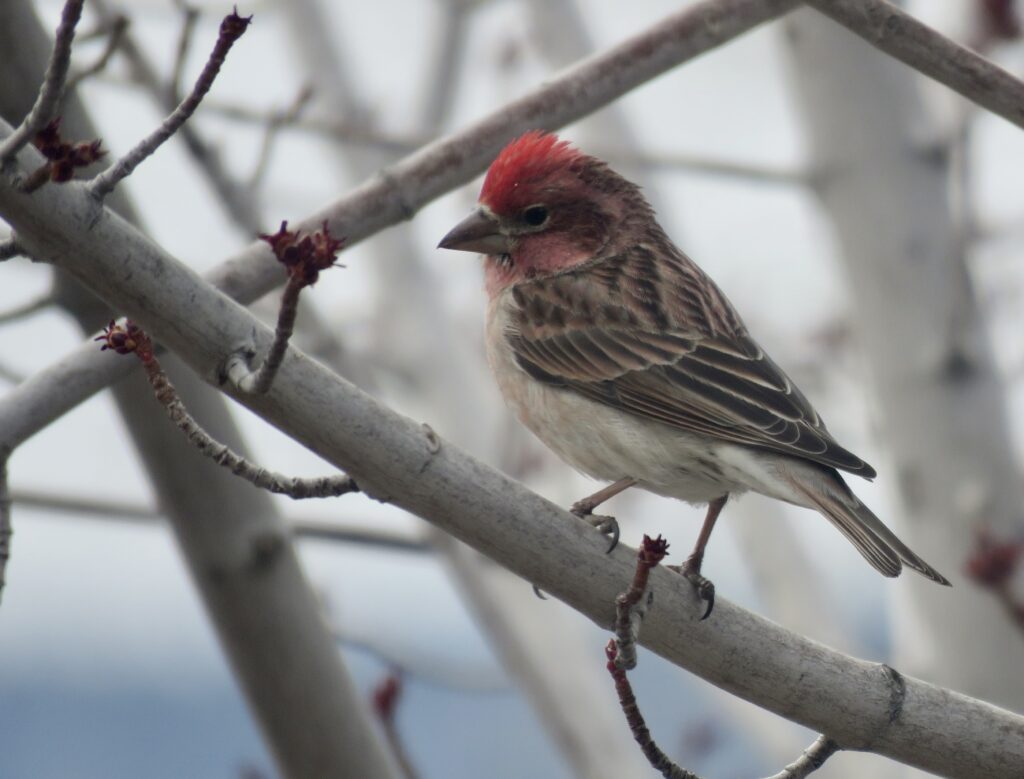
CASSIN’S FINCH IRRUPTION ALERT!
Central
Expect numbers of Cassin’s Finches to increase into the western plains areas of western parts of the Dakotas, Nebraska, Oklahoma, Kansas and Texas, which is what happens in years like this. This has already begun to happen. Active Movements into South Dakota, Kansas, and Texas suggest that this is a year to expect out-of range vagrants as winter approaches, possibly as far afield as the Great Lakes or Eastern US.
Western
After two fairly widespread large Ponderosa pine cone crops, the ponderosa crop (along with Pinyon, Whitebark and Limber pine) has busted, and we expect that core densities of Cassin’s Finches to shift in numbers from the northern part of their range to more central and southern parts of their range. This is often what happens when they irrupt southward every few years. This species is a tricky prediction as shifts in abundance can be muted and local and therefore hard to detect on maps, but we’re confident that the southern part of the range will see more numbers than usual.
Ben Guo in southern New Mexico has documented birds already, which he reports, “is quite uncommon most years.” Indeed, numbers appear as high as ever from the southern California Coast to southeast Arizona, New Mexico, and West Texas. This suggests we may see a full phase of irruption by midwinter, including Cassin’s Finches irrupting deep into Mexico. On the Pacific front, this species has already reached the Channel Islands, Baja California, the Oregon Coast Range, and the Washington Coast, suggesting a westward irruption which rivals the largest historical ones in eBird.
Other Finches:
Rosy-Finches of all three species make local irruptive movements, and Gray-crowned makes full migrations. The irruptive nature of these birds is poorly known, so please let us know if you encounter large flocks in unexpected places. Thus far, this does not look like an irruption year for Rosy-finches, and if El Niño reduces snowfall in the Northwest, this might stifle elevational movements.
Lawrence’s, Lesser, and American Goldfinches do make localized and irruptive movements in response to food sources, but we don’t understand these in detail. If you have information on the migrations of these species, please let us know!
THREE IRRUPTIVE PASSERINES: IRRUPTION ALERTS for Clark’s Nutcrackers, Pinyon Jay and even Woodhouse Scrub-Jays!
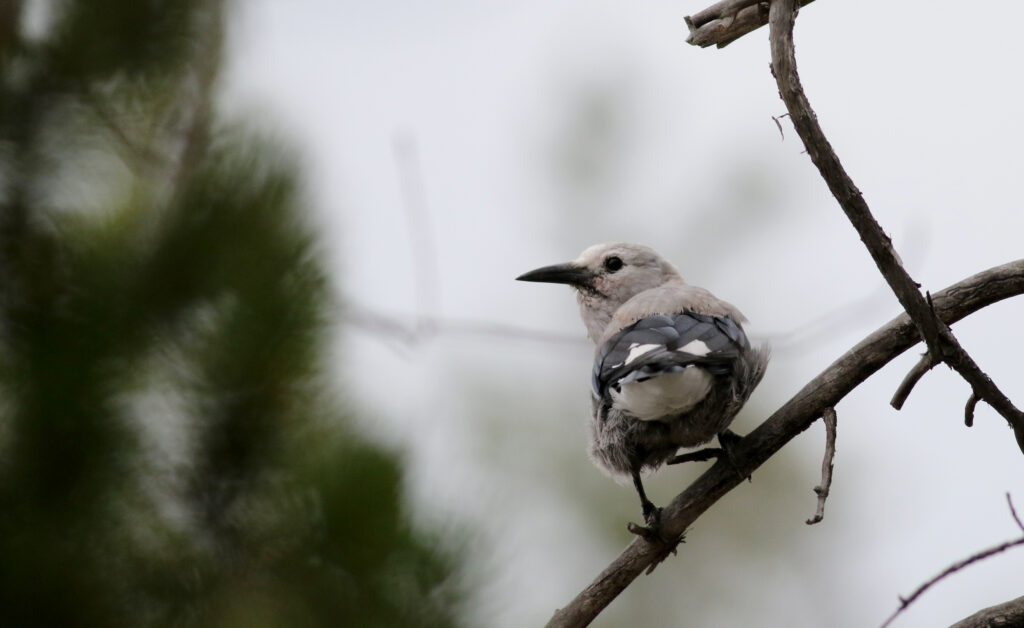
Movements of these Clark’s Nutcrackers, Pinyon Jay and even Woodhouse Scrub-Jays are often linked to the boreal finches.
BLUE JAY IRRUPTION ALERT!
Central
With the poorer crops west of Lake Superior, there should be an above-average flight of Blue Jays southward into the central area. Near the edge of the central region at Hawk Ridge Bird Observatory experienced several days of 1000+ flights, with over 13,000(!!) Blue Jays on September 16th. Expect higher than normal numbers of Blue Jays across the central areas of the United States.
Western
With the big flights at Hawk Ridge, western areas could be in for a doozy of an irruption for corvids this winter (and good for finches as well!). It would not shock us if someone in the western edge of the central region or eastern edge of the western region houses Blue Jay, Steller’s Jay, Woodhouse’s Scrub-Jay, Pinyon Jay and Clark’s Nutcracker at their feeder or in their neighborhood.
NUTCRACKERS AND WESTERN JAYS IRRUPTION ALERT!
While each of the western corvids surely has unique movement patterns, we’re still early in our understanding of their irruptive ecology and thus are treating them together. The widespread failure of limber, pinyon, whitebark, and ponderosa pines are definitely fueling movements of Type 2 Red Crossbills, Type 1 Evening Grosbeak, Cassin’s Finch, Pine Siskin, Red-breasted Nuthatch, and the corvids, Pinyon Jay, Woodhouses Scrub-Jay and Clark’s Nutcrackers, so we expect all of them to continue to move in unusual ways this winter.
Central
The central areas, and even eastern areas have already been in on some of the Clark’s Nutcracker irruption madness, with birds as far east as Wisconsin and Minnesota. Birds have been noted in Dakotas, Nebraska, Kansas, Oklahoma, Texas and Iowa as well! Reports from Wisconsin are among the easternmost ever reports for September, indicating that birders in the northeast should be on the lookout for extreme vagrants as the fall progresses.
Pinyon Jays have also made some movements outside of their normal range onto the southern Great Plains, perhaps in keeping with a moderate to large irruption, though they have so far stayed within the bounds of previous larger movements.
Western
The most intense irruption underway for the Clark’s Nutcracker is apparently on the southwest extremes of its range, where an numbers have passed through the hills and lowlands of Southern California, Mexico, and the southwest deserts in numbers unparalleled in the eBird database. In late September, Nutcrackers made flights over the Pacific to visit the Channel Islands, the first time the species has occurred on several of them. While the species can often move early, birders should look for extralimital Nutcrackers throughout the fall and winter and expect birds to settle in very unexpected places in response to extreme resource scarcity. Birds have also reached the Pacific Coast Ranges and may appear at uncharacteristic sites throughout the West.
Similarly, Pinyon Jays have reached the extremes of their range in the same southwestern regions, irrupting onto the California Coast for the first time in over two decades and to perhaps the greatest ever recorded extent. The species has also set new records on the Channel Islands and is in highly unusual densities near the Mexican border in Arizona and New Mexico. Wanderers are also in flight in the Northern Great Basin, though the northernmost populations are apparently not irrupting as strongly as the southern ones.
Per Martina Nordstrand who reported there definitely have been a lot of Pinyon Jay around in Lincoln Co, WY and we had one fly over in Sublette Co, WY in September.
Ben Guo had an amazing count of almost 200 Clark’s Nutcrackers in Lac Cruces New Mexico, and he also reports that Pinyon Jays have also been reported in the area and that it is “basically unheard from that area”.
Debi Love Shearwater also reported a month ago lots of Clark Nutcrackers moving down into valleys of California.
Steller’s Jays are much more sedentary the Pinyon Jays, but have been known to make local migratory flights. The early appearance of this species at more uncommon locations in Oklahoma and Nebraska suggests this could be an interesting year on the Plains, but we understand little about this species’ movements.
Woodhouse’s Scrub-Jay is also generally sedentary, but may rely on pinion pine seeds in some areas. A local northward irruption into unexpected areas of Idaho does suggest the potential for unusual movements, but few have moved beyond normal limits on the species’ eastern boundaries thus far.
California Scrub-Jays and Canada Jays are not known for migratory or irruptive movements, and no evidence of any has emerged this year. The former continues to expand its range into the northern Interior West as expected.
If you have information on irruptive behavior in any of these western corvid species , please reach out, as we still have much to learn about them!
RED-BREASTED NUTHATCH IRRUPTION ALERT!
Central
The conifer cone crop across the central boreal is poor and so expect a moderate irruptive through the central Region of the United States, which has already started to take place.
Western
Across the west, a large movement of Red-breasted Nuthatches have been noted in the valleys, so expect it to be a very good irruption of Red-breasted nuthatches. Check those random pines this winter in desert locales for the rare red-breasted nuthatch on desert Christmas bird counts.
In some areas, Interior White-breasted Nuthatch may also respond to low pine seed years. There has been some evidence of a light movement through the Great Basin this fall. In irruption years, please record White-breasted Nuthatches encountered throughout the west, as the movements and boundaries of the Pacific, Interior, and Eastern populations may blend.
BOHEMIAN WAXWING
Central
Mountain-ash fruit crops are heavy across many areas of the boreal, and we do not expect any notable Bohemian Waxwing irruption across the central part of the country where this species is rarely found anyway. The one area is the edge of the centra/eastern areas in Minnesota where they often can be seen in numbers from Sax Sim bog northward.
Western
Mountain-ash fruit crops are heavy across many areas of the boreal, and we do not expect any notable Bohemian Waxwing irruption across the western part of the country outside of traditional northwestern areas. Low numbers in the upper Pacific Northwest are consistent with no irruption or a small one.
Other Species — A Call for Information:
If you observe irruptive behavior in other seed-eating or fruit-eating species in the west, please let us know! Pygmy Nuthatches, Acorn Woodpeckers, Townsend’s Solitaires, and other Woodpeckers and Thrushes are examples of species the may respond to food crops.
Final Note:
Expect Pinyon Jay’s, Clark Nutcrackers, Woodhouse’s Scrub-Jays to be reported across unusual locations of the west, so be on the lookout! Cassin’s Finches, Type 2 Red Crossbills, Type 1 Evening Grosbeaks, Red-breasted Nuthatches and Pine Siskins will all be more common in odd valley floor locations throughout this winter.
For those of you in the western half of the United States, enjoy the fun, as this looks to be a memorable winter across your area! Get out and enjoy this very unusual event!
Cover Photo Matt Young
Again, the community on Finches, Irruptions and Mast Crops has been quite helpful sending reports — big kudos to Carl Lundblad, Christopher Frick, Garret McDonald, Brain Maxfield, Marina Nordstand, Ben Guo and others for helping us out!
The Finch Research Network (FiRN) is a nonprofit, and was granted 501c3 status in 2020. We are a co-lead on the International Evening Grosbeak Road to Recovery Project, and have funded almost $22,000 to go towards research, conservation and education for finch projects in the last couple years. FiRN is committed to researching and protecting these birds like the Evening Grosbeak, Purple Finch, Crossbills, Rosy-finches, and Hawaii’s finches the honeycreepers.
If you have been enjoying all the finch forecasts, blogs and identifying of Evening Grosbeak and Red Crossbill call types (20,000+ recordings listened to and identified), redpoll subspecies and green morph Pine Siskins FiRN has helped with over the years, please think about supporting our efforts and making a small donation at the donate link below. The Evening Grosbeak Project is in need of continued funding to help keep it going.
Donate – FINCH RESEARCH NETWORK (finchnetwork.org)
Book Link
For help with Finch ID and much much more, here is a link to the exciting and newly released Stokes Guide to Finches of the United States and Canada: https://www.amazon.com/Stokes-Finches-United-States-Canada/dp/0316419931
Please think about joining Finch Research Network iNaturalist Projects:
Winter Finch Food Assessment Project/Become a Finch Forecaster: https://finchnetwork.org/the-finch-food-assessment-become-a-finch-forecaster
Finch Information Links
- Finch Research Network with finch species information https://finchnetwork.org/
- Crossbills of North America: Species and Red Crossbill Call Types: https://finchnetwork.org/crossbills-of-north-america-species-and-red-crossbill-call-types
- Type 12 Red Crossbill: https://finchnetwork.org/type-12-the-old-northeastern-red-crossbill
- A Crossbill’s Guide to Conifers of the Eastern Forest: https://finchnetwork.org/a-crossbills-guide-to-conifers-of-the-northeastern-forest
- A Crossbill’s Guide to Conifers of the Western Forest: https://finchnetwork.org/a-crossbills-guide-to-conifers-in-western-north-america
- Red Crossbill North American iNat Foraging Project: https://finchnetwork.org/crossbill-foraging-project
- Evening Grosbeak Call Types https://finchnetwork.org/species/grosbeaks/the-evening-grosbeak-project To support research and conservation for this species of conservation concern: https://finchnetwork.org/donate
- Evening Grosbeak Road to Recovery Project: https://finchnetwork.org/projects/the-evening-grosbeak-project
- Evening Grosbeak North American iNat Foraging Project: https://finchnetwork.org/evening-grosbeak-foraging-project
- Evening Grosbeak iNat Window Collisions Project: https://www.inaturalist.org/projects/evening-grosbeak-window-collisions
- Subspecies of Common and Hoary Redpolls – ID Tips and Photos.http://www.jeaniron.ca/2015/redpollsRP.htm
- Redpolls are Lumped: Redpolls United! Highlights from the 2024 AOS Checklist Update | All About Birds[TH1]
- Previous Winter Finch Forecasts 1999-2019: http://www.jeaniron.ca/WFFindex.htm
- 2020-2025 Winter Forecasts are available under the menu at https://finchnetwork.org/
I would like to thank the many birders, naturalists, biologists, and foresters who share their recordings and tree seed reports to contribute to this forecast