Help FiRN Continue Evening Grosbeak and Finch Work Across North America
Hello Finch Fans,
This winter and spring, FiRN is planning some exciting Evening Grosbeak research, as well as continued development of finch acoustic analysis tools – and we need your support to pull it off.
Upcoming Evening Grosbeak Research in Oregon
The Problem:
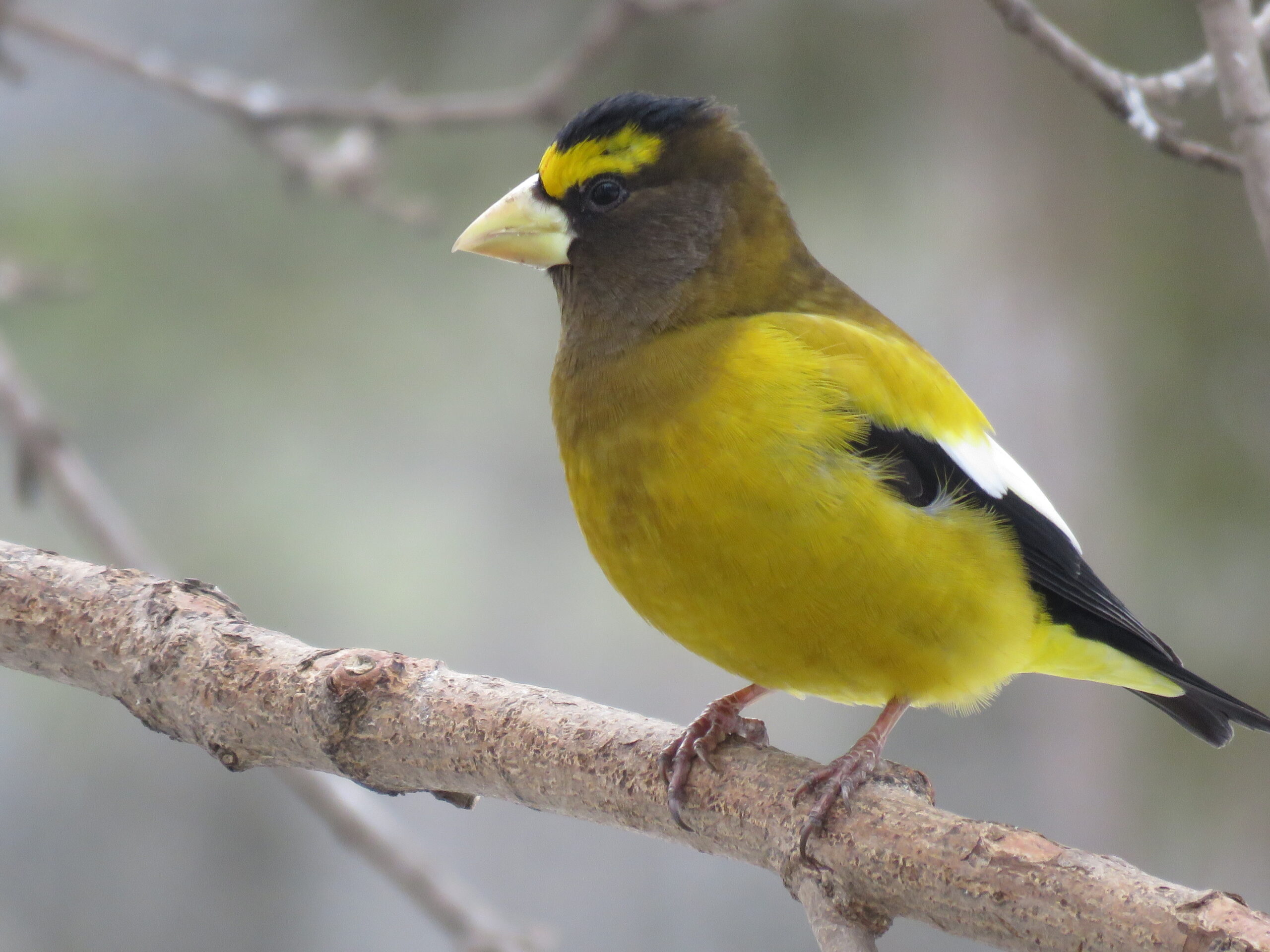
With a 92% decline since 1970, Evening Grosbeak (Coccothraustes vespertinus) was cited as the steepest declining landbird in the continental United States and Canada in the Partners in Flight 2016 Landbird Conservation Plan.
What FiRN is Doing About It:
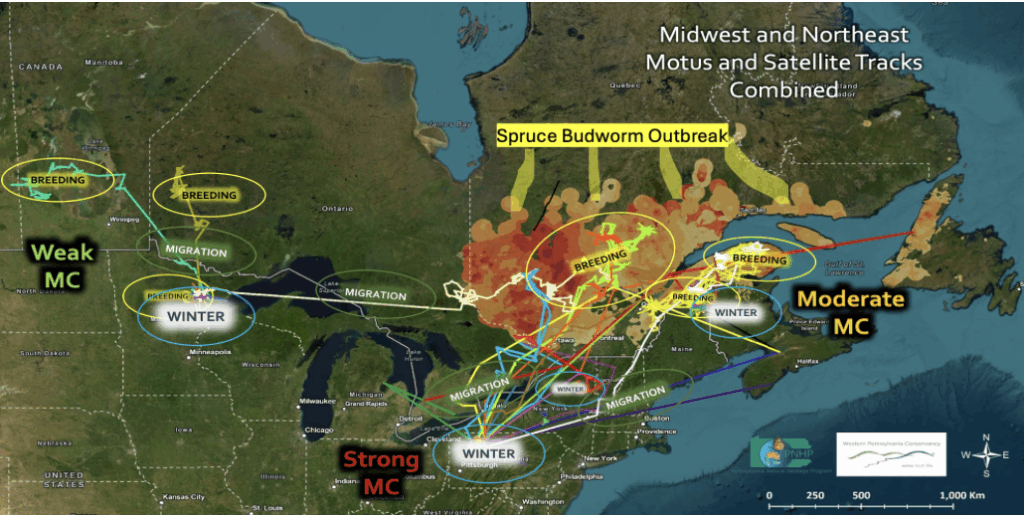
FiRN is playing a role in the Evening Grosbeak International Road to Recovery. There are different populations of Evening Grosbeak, and we are trying to figure out range boundaries and how they interact. Last year, your donations helped us venture to Vermont, New Hampshire and Michigan for the first time to study and band Evening Grosbeak populations. Satellite tag data from those trips are allowing us to better understand “Migratory Connectivity” between breeding and wintering grounds.
How You Can Help:
Your donation will help fund research in Oregon banding and tagging new populations of Evening Grosbeak.
Development of Finch Acoustic Analysis Tools
Did you know that there are over 33,000 recordings of Red Crossbill in Cornell’s Macaulay Library of Natural Sounds – and nearly all the flight call recordings were identified to call type by just two people? Those two FiRN board members (Matt Young and Tim Spahr) have done an incredible job, but with more and more recordings rolling in every day, it is time to develop some automated tools to help Matt and Tim out.
To that end, a small team at FiRN has started developing tools that harness the power of AI to identify Red Crossbill call types. We’re also using this tool to filter thousands of hours of ARU (autonomous recording unit) recordings that FiRN has gathered during research trips. We’d like to improve this system, and expand it to work for additional species that may have different call types, for example Evening Grosbeak. Your donations will help continue this development work, and to produce the analyses of large datasets such as our ARU recordings.
The Year Ahead
We appreciate your support as we tackle these projects, as well as many other finch research efforts such as our purple finch project. For more details of what we’ve done and what we’re planning to do in 2026, please browse our newly updated website.
With Gratitude, Matthew A. Young
Founder & Board President Finch Research Network